
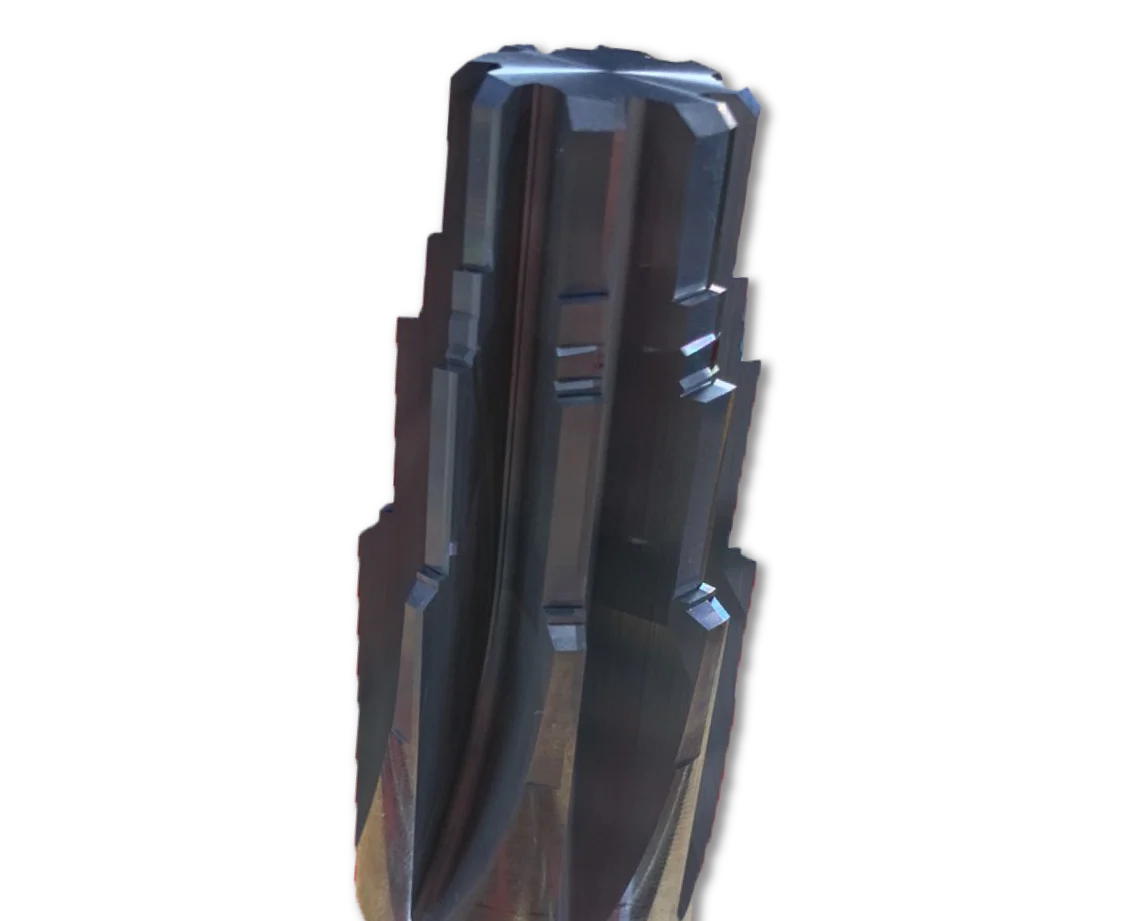
Custom Step Reamer Designed to Help an Automotive Manufacturer Reduce Machine Count
An automotive manufacturer partnered with Fullerton Tool Company to develop a custom step reamer for a new production process. The goal was to reduce the number of machines required from three to two without increasing cycle time or compromising part quality.
At a Glance
The Challenge
The customer was developing a manufacturing process for a new part and wanted to reduce the required equipment footprint from three machines to two.
The new process still needed to meet the customer's cycle-time and quality requirements. Achieving that goal required more than a small adjustment to the existing setup — it required rethinking how the operation was completed.
A custom step reamer was identified as a solution for combining operations and making the two-machine process possible.
Why Fullerton?
The customer selected Fullerton based on competitive pricing and previous success with Fullerton custom tooling.
That prior experience gave the customer confidence in Fullerton's ability to develop an application-specific solution while providing the quality and value the new process required.
The Solution
Fullerton designed and manufactured a custom step reamer for the application, which the customer implemented independently without on-site support.
During the initial trial, the first version of the reamer did not cut through the full length of the part as intended — and that trial produced valuable application data. Fullerton's engineering team used those findings to refine the geometry and dial the tool in to the customer's part.
Working the design against real results, rather than assumptions, is exactly how a custom tool gets matched to a demanding new process.
A Collaborative Approach
Consolidating three machines into two is an engineering problem, not a catalog lookup. It takes a tool built around the part — and a partner willing to test, learn, and refine until the process works.
That's the way Fullerton's F.A.S.T. team approaches every custom development: design, trial, measure, and adjust, in close partnership with the customer's floor.
When Does a Custom Step Reamer Make Sense?
A custom step reamer may be worth evaluating when:
- You're trying to reduce the number of machines or setups a part requires
- Several diameters or features could be combined into one reaming operation
- A new process needs to hold cycle time and quality with less equipment
- The application is unusual enough that a standard reamer won't fit
- You want an engineering partner to develop and refine the tool with you
If a new part could run on fewer machines with the right tool, it's worth a conversation with our engineering team.
Frequently Asked Questions
What type of company is featured in this case study? +−
The customer is an automotive manufacturer that has operated since 1978 and specializes in high-volume parts for specialized equipment.
What was the customer trying to accomplish? +−
The customer wanted to reduce the manufacturing process for a new part from three machines to two without increasing cycle time or reducing part quality.
Why did the customer choose Fullerton? +−
The customer selected Fullerton based on competitive pricing and previous success with Fullerton custom tooling solutions.
How does Fullerton refine a custom tool for a new application? +−
Fullerton designs the tool around the part, trials it in the real application, and uses the results to adjust the geometry. In this project, the first trial provided data the engineering team used to refine the reamer for the customer's part.
Trying to Take a Machine Out of Your Process?
Tell us about your process and our engineering team will help you consolidate operations into fewer tools.
