
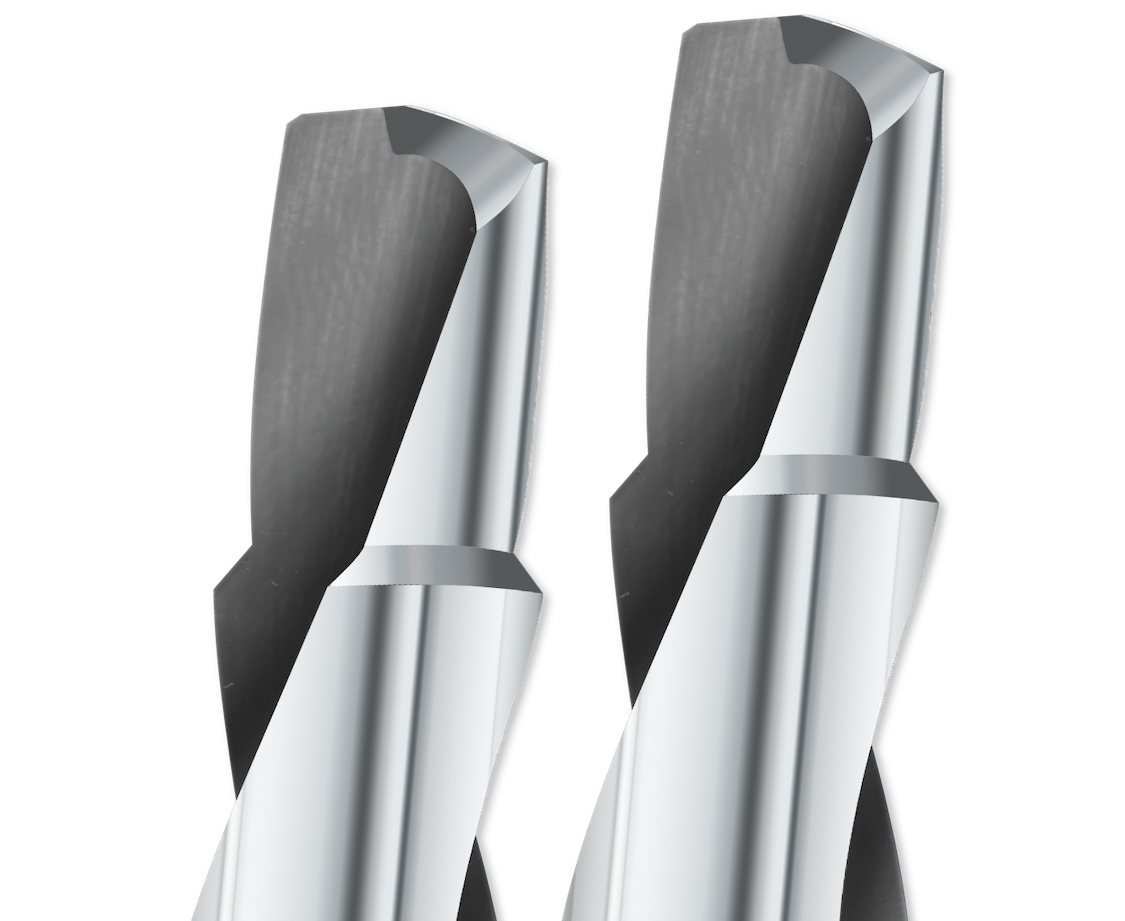
Custom Step Drill Replaces Two Tools and Saves $57,400 Annually
Why use two drills when one can do the job faster?
Fullerton designed a custom step drill that combined two drilling operations into a single tool. The result was 50% fewer tool changes, three times faster cut time, and $57,400 in annual savings for an automotive manufacturer.
At a Glance
The Challenge
An automotive manufacturer was using two separate drills to complete one cast iron application. That meant two tools to purchase, manage, and replace — plus a tool change in the middle of the operation.
The extra step added setup time, slowed production, and increased the overall cost of drilling each part. The customer needed a way to simplify the process without sacrificing tool life or performance.
The Solution
Fullerton engineered a custom step drill that combined both drilling steps into a single tool. Instead of running one drill, changing tools, and running a second drill, the customer could complete the entire operation with one tool. This reduced the number of tool changes by 50% and kept the machine focused on making parts.
The custom step drill also ran faster and produced more parts per tool than the previous two-drill setup.
The tools were not tested under identical machining conditions. The Fullerton step drill ran at a higher feed rate while delivering a shorter cut time and greater parts-per-tool output.
The Results
One custom step drill made a measurable difference across the entire operation:
- 50% fewer tool changes: Two drills were consolidated into one custom tool.
- 700 parts per tool: The step drill produced 700 parts compared to 500 with the previous setup.
- 1.5× greater output: The customer produced more parts before needing to replace the tool.
- Three times faster cut time: Cut time dropped from 0.33 minutes to 0.11 minutes per part.
- $57,400 in annual savings: Fewer tool changes, longer tool life, and faster production significantly reduced the cost of the operation.
One less drill. One less tool change. A whole lot more productivity.
When Does Tool Consolidation Make Sense?
A custom step drill may be worth evaluating when:
- A part requires two or more drilling tools in sequence
- Tool changes are adding unnecessary cycle time
- Multiple drills are taking up valuable space in the tool magazine
- Setup time is slowing down a high-volume application
- The current process isn't meeting tool-life or cost-per-part goals
- You're machining cast iron or another material that requires application-specific geometry
If two drills are working on the same feature, there may be an opportunity to combine them and keep production moving.
Frequently Asked Questions
How much did the custom step drill save annually? +−
The custom step drill saved the automotive manufacturer $57,400 annually. The savings came from consolidating two drills into one, reducing tool changes by 50%, increasing parts per tool, and shortening cut time.
How many tools did the custom step drill replace? +−
It replaced two separate drills with one custom step drill, reducing the number of tool changes required for the operation by 50%.
How many parts did the custom step drill produce? +−
The Fullerton step drill produced 700 parts per tool compared to 500 parts with the previous two-drill setup — a 1.5× improvement.
How much did cut time improve? +−
Cut time decreased from 0.33 minutes to 0.11 minutes per part, making the drilling portion of the operation approximately three times faster.
Were both tools tested under the same machining conditions? +−
No. The Fullerton step drill ran at a higher feed rate of 40.5 IPM compared to 13.75 IPM for the previous setup. It also delivered a shorter cut time and produced more parts per tool.
What material and industry was the step drill designed for? +−
The custom step drill was designed for drilling cast iron in an automotive manufacturing application.
Two Drills Working the Same Feature?
Tell us about your operation and our engineering team will see if they can be combined into one.
